

Financial mistakes can happen to anyone—whether you’re a financial professional or a complete beginner. These mistakes can lead to missed opportunities, but the good news is it’s never too late to bounce back and learn how to avoid them.
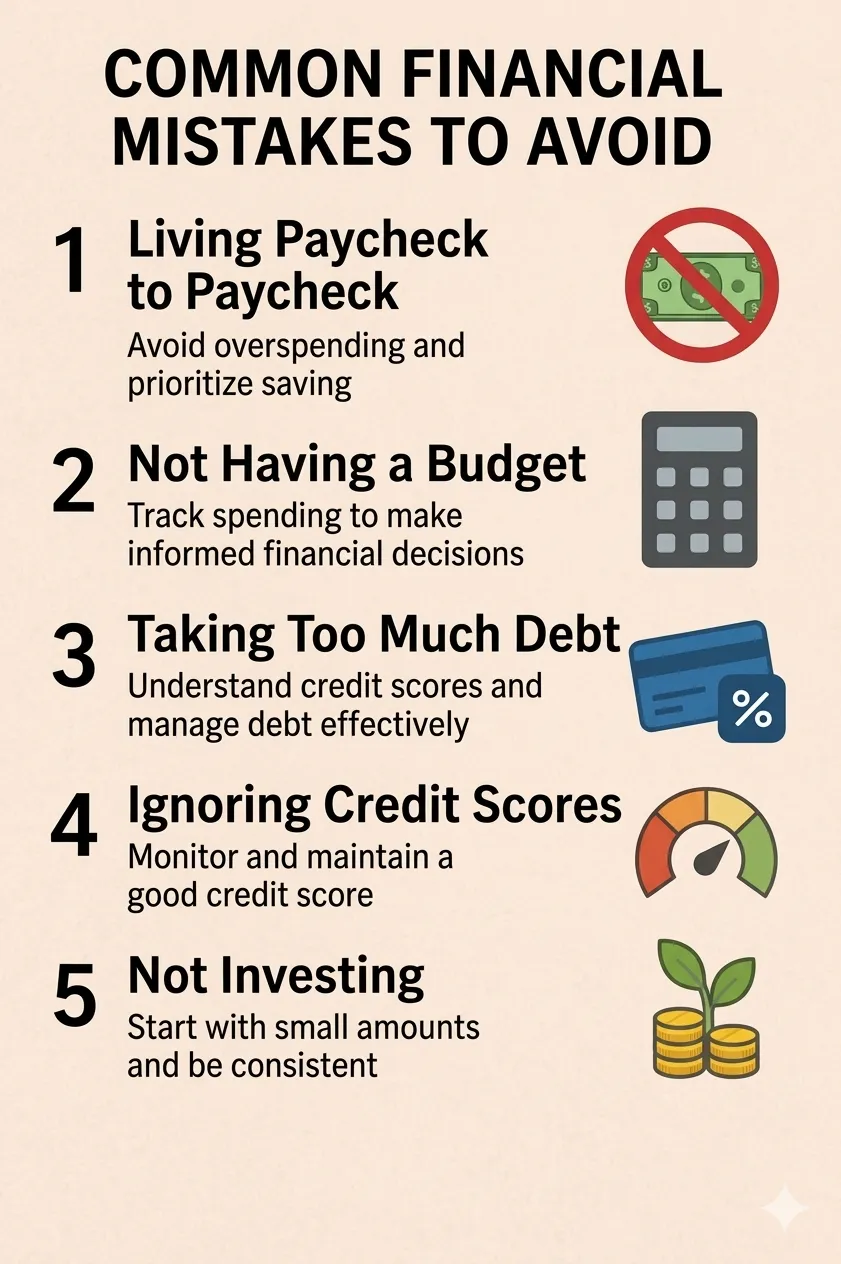
1. Having a disorganized budget (or no budget at all)
One of the most common financial mistakes is neglecting to set or maintain a realistic budget. A budget acts as your financial compass, guiding you toward achieving goals like buying a home, reducing debt, or taking a long-awaited trip.
However, a budget is only as effective as the effort you put into it. If you created a budget last year but never tracked your daily income and expenses, it’s likely not helping you.
Or, if your budget leaves out occasional costs (like annual car registration fees or holiday gifts) or doesn’t allow for occasional treats, it may be impossible to stick to.
Tip: Perform a financial audit and strengthen your budget. A useful guideline is the 50/30/20 rule:
- 50% for needs (housing, car, healthcare, etc.)
- 30% for wants (entertainment, dining out, etc.)
- 20% for savings, debt repayment, and investments
These percentages are flexible; allocating more than 20% to savings will benefit you in the long term. Budgeting apps can automatically track spending and help with calculations.
2. Not having a solid emergency fund

Many Americans cannot cover a $1,000 emergency, such as a broken water heater, urgent car repair, or hospital visit.
Without sufficient emergency savings, you may have to borrow from family or friends, or use high-interest credit cards.
An emergency fund is crucial. Experts recommend contributing regularly, ideally through automatic payroll deposits, so you aren’t tempted to spend it.
To determine the right amount, calculate three to six months of household expenses and ensure this money is always available.
3. Leaving money on the table
Does your employer offer a 401K match or discounted company stock? Not taking advantage is like leaving free money on the table.
Employers often match retirement contributions up to a certain percentage. Failing to participate means missing part of your pay.
Ensure your life insurance and benefits have a designated beneficiary as well, maximizing your total compensation.
4. Foregoing life insurance
Planning for your loved ones’ financial security is critical. The average funeral costs around $8,300. Life insurance helps your family cover expenses and ensures stability after your passing.
Life insurance is often affordable for healthy adults and provides priceless peace of mind.
5. Not shopping around for big purchases
Whether it’s car insurance, mortgages, electronics, or travel, comparing options can save a significant amount.
Online tools and apps make comparison shopping easier than ever. Regularly reviewing the market ensures you get the best deals, even if you are brand loyal.
6. Continuing to pay for subscriptions you don’t use
Many people pay for unused subscriptions. The average American consumer spends $924 annually on streaming services alone.
Check recurring payments like gyms, apps, or streaming services. Subscription-cutting apps can help identify and cancel unused services. Small payments add up, so consider whether each service is worth it.
7. Buying a new car
Avoid purchasing a new car just because you can afford the monthly payment. Cars depreciate quickly—up to 30% in the first two years.
Better option: Certified pre-owned vehicles, typically 2–3 years old with low mileage. These often come with a manufacturer’s warranty and full inspection, giving many benefits of a new car at a lower price.
8. Overusing credit cards
Credit cards are powerful for building credit, but high limits can encourage overspending.
Many people don’t realize minimum payments mostly cover interest. Responsible use has benefits, but avoid carrying large balances.
If you have high balances, consider a personal loan or a low-interest balance transfer to pay them down. Use a rewards card with a reasonable interest rate and pay in full monthly to improve your credit score.
9. Ignoring your credit report
Neglecting your credit report is dangerous. Lenders, landlords, and even employers may check it. Errors or negative marks can result in high interest rates or loan denial.
You’re entitled to a free credit report annually from each of the three major bureaus at annualcreditreport.com. Dispute errors promptly.
10. Falling behind on monthly bills
Late payments lead to fees, higher interest rates, and negative credit reporting for up to seven years.
If you’re behind, catch up immediately. Use automatic payments or calendar reminders to stay on track. A proper budget helps manage expenses and prevent future late payments.
11. Not having a plan to manage your debt
Debt isn’t inherently bad—it just needs a plan. Without one, you may only make minimum payments, harm your credit utilization ratio, and limit future borrowing opportunities.
Solutions:
- Debt consolidation loan: combine multiple debts into a single loan with a fixed repayment plan.
- Debt snowball method: pay off small balances first, then larger ones.
Having a clear debt plan improves overall financial well-being.
These 11 financial mistakes are common, but avoiding them can significantly improve your financial health. Start tracking your money, building an emergency fund, and creating a debt plan today to secure your financial future.