
Investing often face a key question: Should they pay for a portfolio manager to actively manage their investments, aiming for higher returns, or should they invest in a low-cost index fund that simply “tracks the market”?
What is Passive Investing?
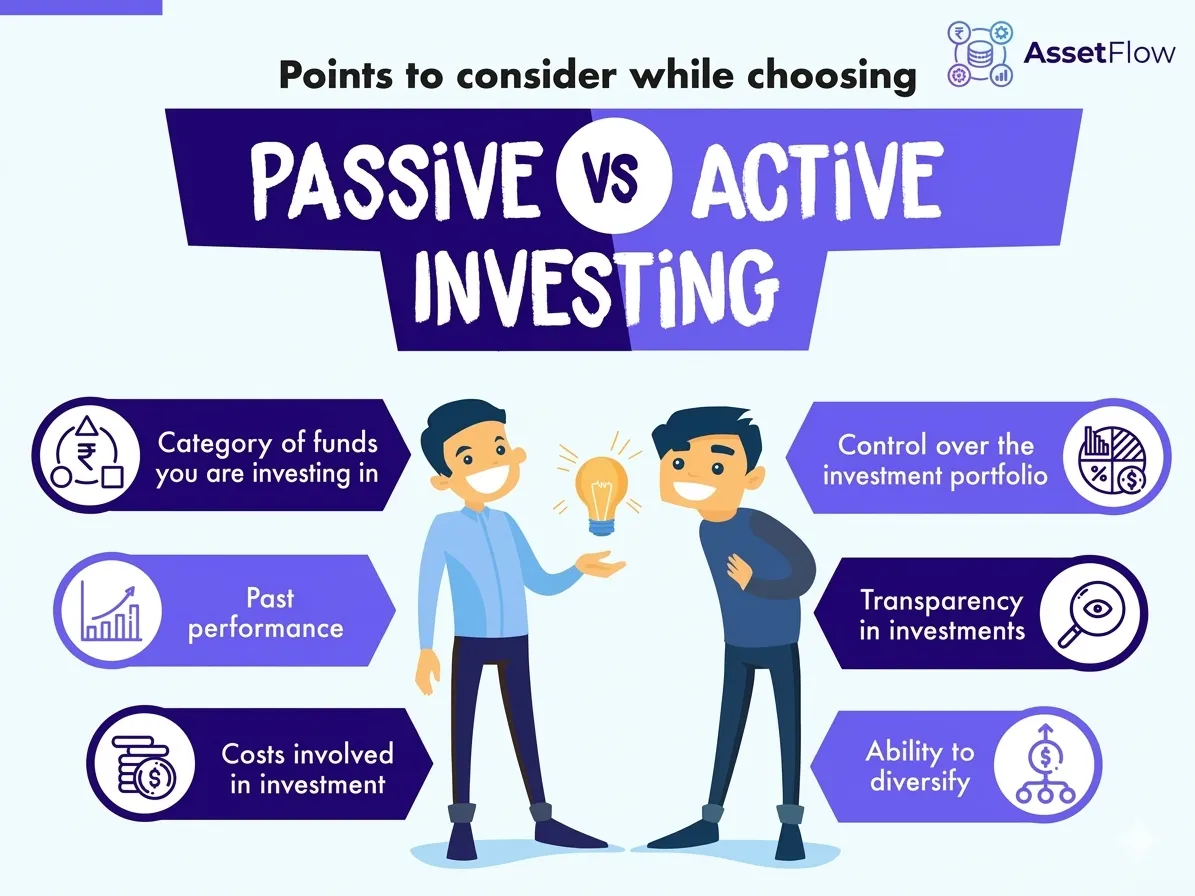
Passive investing is a buy-and-hold approach that seeks to benefit from the long-term growth of the overall market. It is simple, cost-effective, and reduces the risk of emotional decision-making.
Implementation examples:
- Index Funds: Follow major indices such as the S&P 500, Dow Jones, or Russell 2000. The fund automatically adjusts its holdings to reflect changes in the index.
- Passive Mutual Funds: Pool money from investors to purchase a diversified set of assets. Trades are executed once daily at a single price.
- Passive ETFs: Similar to mutual funds but traded like individual stocks, allowing intraday buying and selling.
Potential Benefits of Passive Investing:
- Easy to understand and implement.
- Low cost due to minimal trading and no need for expert stock analysis.
- Historically, indices provide long-term growth.
- Often offers strong fee- and tax-adjusted returns compared to some active strategies.
Limitations:
- Limited flexibility—you can only invest in the stocks the index includes.
- Cannot respond quickly to short-term market opportunities or risks.
What is Active Investing?
Active investing involves using research and analysis to select stocks with specific characteristics to outperform the market. Managers actively buy and sell assets based on market conditions and company fundamentals.
Quality Investing Example:
A type of active investing that focuses on companies with strong financial metrics, such as high returns on equity, low debt, strong free cash flow, and sustainable competitive advantages.
Potential Benefits of Active Investing:
- Opportunity for higher returns than the market.
- Flexibility to invest in undervalued stocks and exit underperforming ones.
- Potential for tax management strategies on large gains.
Why Active Investing Matters in Volatile Markets:
- During high volatility or market dispersion, high-quality companies stand out.
- Active managers focusing on quality can create “alpha,” or returns above the market benchmark.
- Professional management helps navigate unpredictable market changes.