

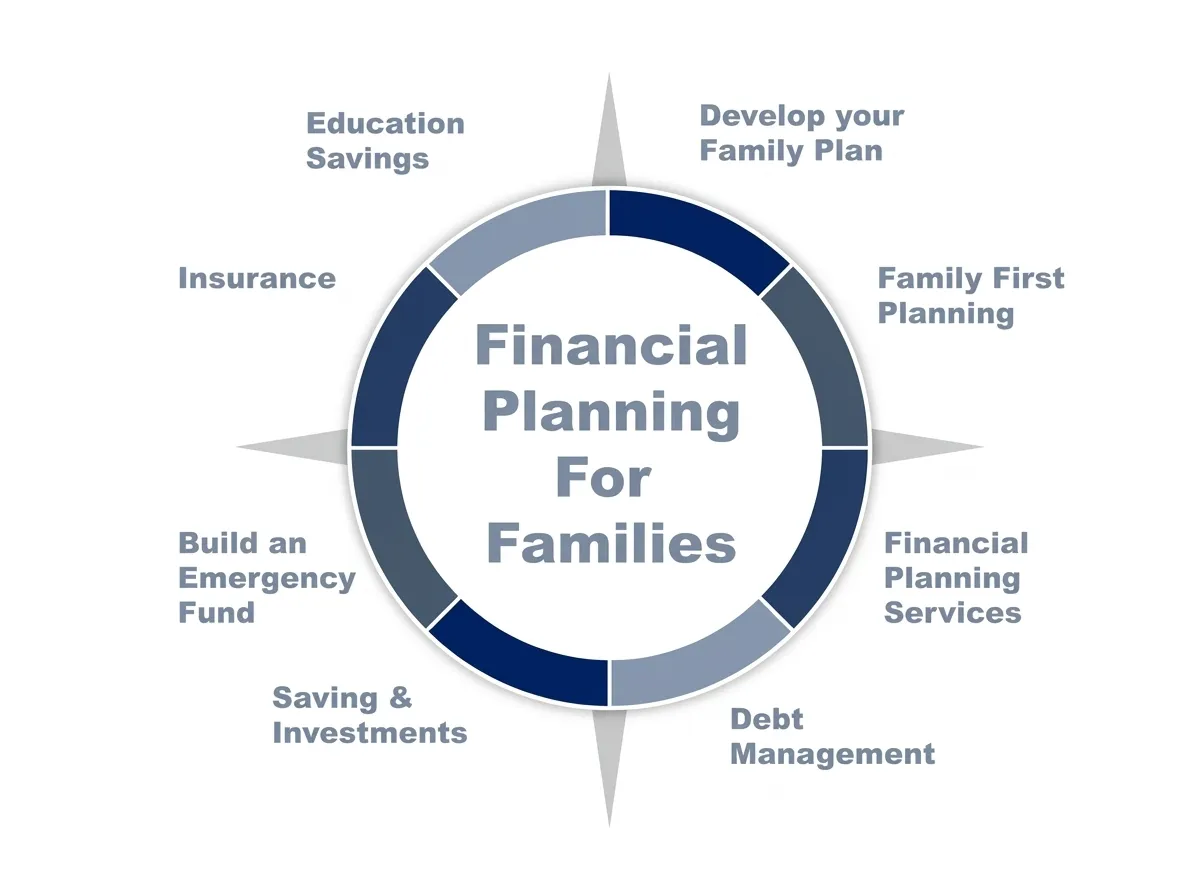
Family financial planning starts with the basics, such as budgeting, paying down debt, and saving money. However, a family financial plan can also include long-term considerations such as investing for retirement and saving for your children’s education. A well-structured financial plan gives your household stability, prepares you for both expected and unexpected expenses, and creates a shared financial roadmap so that all family members are working toward the same goals.
While you can create a family financial plan yourself, a financial advisor can provide guidance and expertise to build a plan tailored to your budget, priorities, and future goals.
What Is Family Financial Planning?

Financial planning broadly refers to outlining specific financial goals and determining the steps required to achieve them. Family financial planning focuses on the unique needs of a household and involves managing income, expenses, savings, investments, and protection strategies. It is a way to ensure financial security while supporting the family’s needs and aspirations over the long term.
Why It Matters:
- Roadmap for Financial Future: Establishing a plan helps you make informed decisions and prioritize your spending.
- Risk and Opportunity Management: Regularly reviewing your family’s finances helps you adjust to unexpected changes and take advantage of financial opportunities.
- Shared Financial Vision: Involving your spouse, children, or other family members ensures that everyone understands and agrees on the family’s financial goals.
Key Steps to Creating a Family Financial Plan
1. Budgeting and Spending
A budget is the foundation of any financial plan.
- Use online tools, apps, or spreadsheets to track income and expenses.
- Conduct monthly reviews to see where money is going and identify areas to reduce spending.
- Annual reviews are recommended to assess year-over-year spending trends.
- Reducing expenses in one area can free up money to reach other financial goals, such as debt repayment or savings.
2. Debt Repayment
Debt repayment is a crucial part of a family financial plan. Types of debt may include:
- Credit cards
- Student loans
- Mortgages
Strategies:
- Prioritize paying off high-interest debts first, such as credit cards, while maintaining minimum payments on lower-interest loans.
- Consider refinancing options to lower interest rates and accelerate payoff.
- Allocate extra funds from bonuses, tax refunds, or side income toward debt reduction.
3. Financial Goals
Establishing clear, measurable goals helps guide financial decisions. Goals can be:
Long-term:
- Saving $2 million for retirement
- Paying off a mortgage by age 50
- Saving $100,000 for college expenses
Short- to Mid-term:
- Building a $10,000 emergency fund
- Saving $5,000 for a family vacation
Tips for Goal Setting:
- Be realistic and specific
- Set deadlines for each goal
- Identify actionable steps to achieve each target
4. Retirement Planning
Planning for retirement ensures financial independence and reduces future dependence on children. Steps include:
- Contributing to workplace retirement plans, such as 401(k)s, and maximizing employer matching contributions
- Opening individual retirement accounts (IRAs or Roth IRAs) if workplace plans are not available
- Considering Social Security benefits as part of your retirement strategy
- Starting early to benefit from compounding growth
5. College Planning
Raising children involves planning for their education. Effective college planning includes:
- Opening tax-advantaged accounts like 529 plans or Coverdell Education Savings Accounts
- Saving early even if the amounts are small
- Discussing scholarships, grants, and financial aid options
- Setting expectations for children contributing through part-time work
6. Insurance Planning
Insurance protects the family against financial hardship:
- Health insurance for all family members
- Homeowners and auto insurance
- Life insurance, including term life insurance, even for stay-at-home parents
- Provides reassurance and financial safety in case of unexpected events
7. Estate Planning
Estate planning ensures your family is protected in case of death or incapacity:
- Establish a last will to determine inheritance and guardianship for minor children
- Consider setting up trusts if significant assets exist
- Prepare advance healthcare directives and powers of attorney for emergencies
Integrating Cash-Flow Planning
Cash-flow planning shows how income supports both day-to-day expenses and long-term financial goals. It complements budgeting by giving a clear picture of monthly inflows and outflows, including:
- Paychecks, side income, or benefits
- Regular and variable expenses
Benefits of Cash-Flow Planning:
- Helps families with irregular or seasonal income create a reserve for slower months
- Supports planning for major expenses such as retirement contributions, childcare, or college
- Allows families to adjust spending and contributions as circumstances change
- Tracking cash flow over time shows whether the financial plan is working and highlights areas needing updates
Working With a Financial Advisor
A financial advisor can provide expertise and guidance for areas such as:
- Investment strategies
- Retirement planning
- Risk management and insurance
- Comprehensive analysis to identify gaps in your financial plan
Choosing an Advisor:
- Fee-based advisors may earn commissions from financial products
- Fee-only advisors charge solely for services rendered
Bottom Line
Family financial planning is essential for anyone managing money for more than just themselves. Planning ahead increases the likelihood of achieving financial goals and provides stability for the household. Whether you choose to create a plan on your own or work with a financial advisor, starting early and reviewing your plan regularly is key.
Tips:
- Use free budget calculators to build a strong foundation
- Consider consulting a vetted financial advisor for personalized guidance
This version preserves all sections, examples, practical tips, and explanations from the original article while being in clear English.